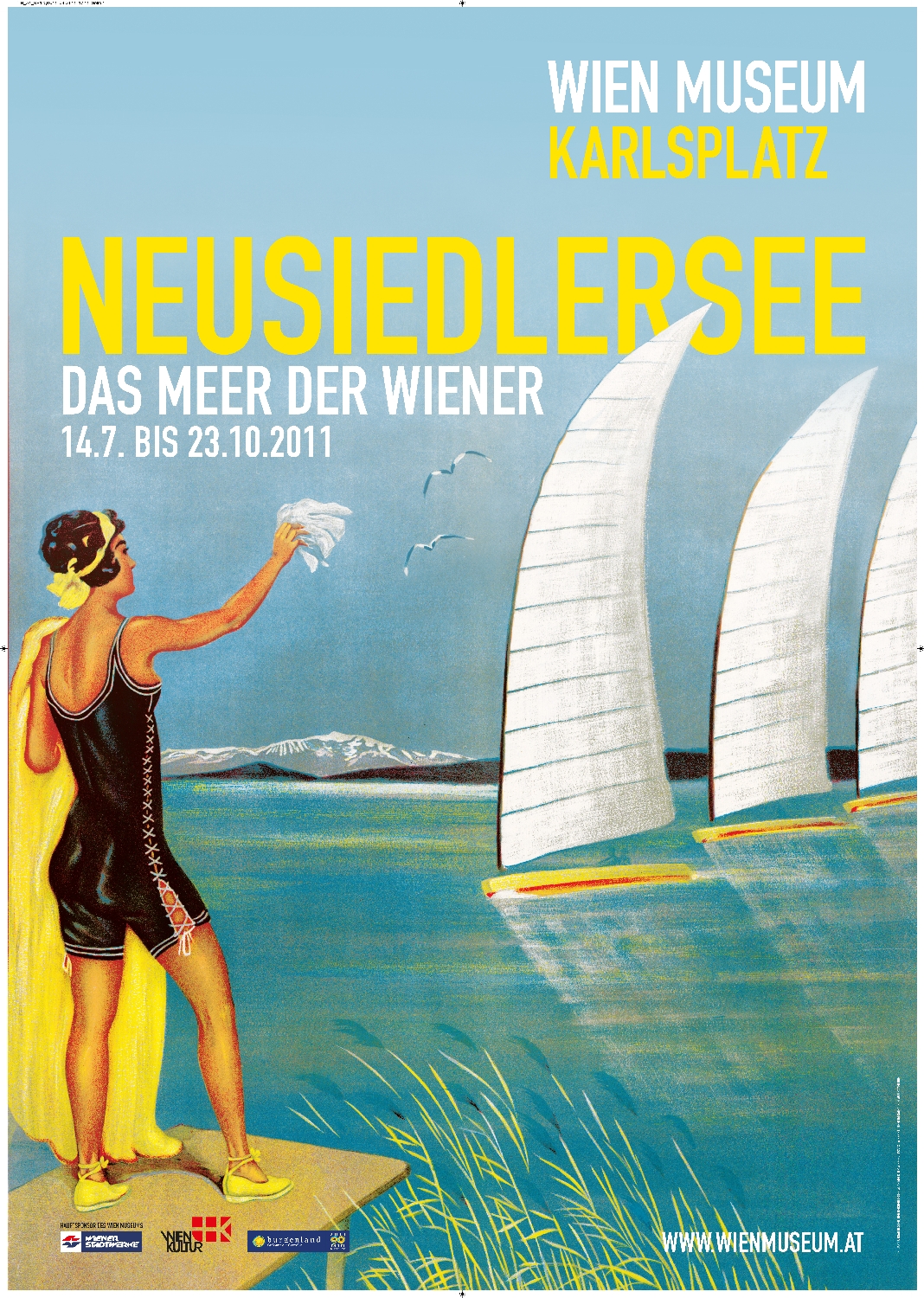
Lake Neusiedl
The Sea of the Viennese
July 14 – October 23, 2011
Lake Neusiedl
The Sea of the Viennese
50 kilometres from Vienna lies the most westerly steppe lake in Europe, with a thick fringe of reeds and unique animal life. An area once described as “fatal, marshy lowland”, is now seen as a “nature paradise”. Yet it is the result of a radical transformation in the landscape. Extreme water fluctuations led to the complete drying of the lake in 1865. Permanent drainage was even considered, and the water level has only been artificially regulated for around 50 years. The exhibition at Wien Museum concerns the history of the lake since the 18th century – from Viennese perspective.
The slogan “the Viennese Sea” was created in the 1920s, an invention of Burgenland’s tourism advertising. Up to that point the massive lake barely registered in the collective consciousness of the city dwellers; nor did it feature more than occasionally as a motive in art.
It was only in 1921 when Burgenland became the ninth province of Austria that the expanse of water, located now mainly in Austria and acting as a border to Hungary, increasingly attracted day-trippers, as well as those who loved swimming and sailing, from Vienna. The landscape, unlike the mostly Alpine country of Austria, exerted a fascination: the Pannonian heath in the Seewinkel, a group of little lakes on the Eeastern side of the Neusiedler Lake, is often compared with the Asian steppes and African savannah. Yet the landscape’s most permanent icon was not to emerge until after 1945 with the picture postcard motif “Reed hut with well”.
The lake played a historically important role during the Cold War: in 1956 tens of thousands of Hungarian refugees found their way to the West across the "Bridge of Andau". In the 1950s the lake also turned into the ideal destination for day trippers, thanks to the motorisation that began around that time. Soon Viennese artists and intellectuals, fascinated by the light and the archaism of the area with its narrow wine-growers’ alleyways, likewise found their "alternative landscape" around the Neusiedler Lake. Their names include Roland Rainer, Karl Prantl, Wander Bertoni, Otto Muehl or Gottfried Kumpf: the Pannonian vastness turned into the country of Utopia.
Recently the region has started to present itself as the “landscape of pleasure”, with farmers who once churned out table wine in 2-litre bottles now becoming up-market winemakers – not least of all due to the wine scandal of the 1980s.